What Ground-Zero Workflow Redesign Actually Looks Like Before an AI Agent Is Named
Fixing broken workflows before naming an AI agent determines whether automation will actually work.
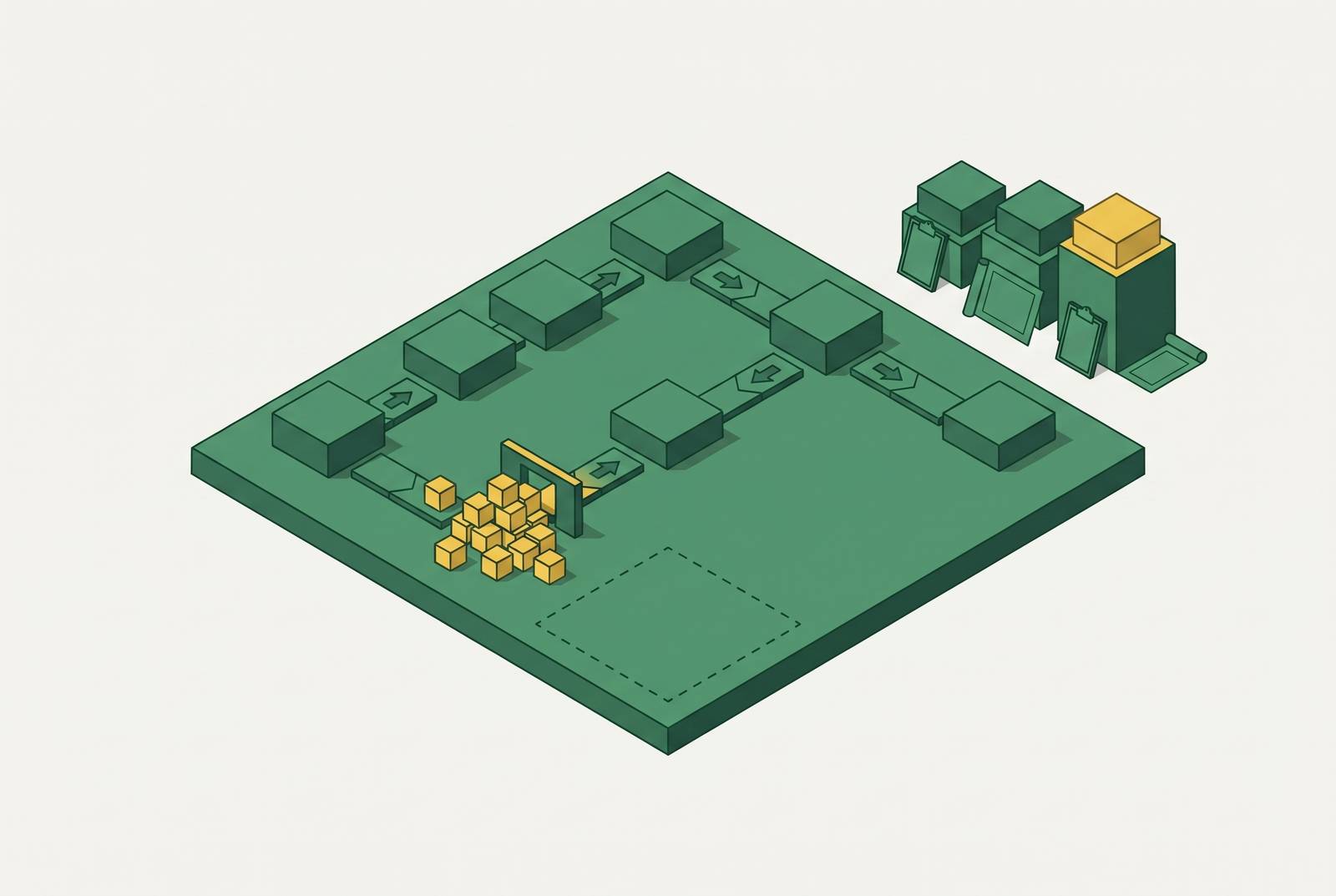
Rebuilding department workflows with AI agents from scratch starts with a ground-zero audit before any agent is chosen. The audit reconstructs how decisions, handoffs, data and exceptions actually move through the department, then determines what must be rebuilt before autonomous execution is appropriate.
Why most AI deployments fail before an agent is ever chosen
Most organizations put AI agents into processes that were never designed to receive them. The technology changes, but work is still split up in the same way, with the same unclear approvals, records that are kept apart and informal decisions. McKinsey's 2025 research found that only 21% of respondents reporting generative AI use said their organizations had fundamentally redesigned at least some workflows. Adoption and redesign are different commitments. A department can introduce AI across its work while leaving dependencies required for completion unresolved.
BCG's June 2026 report identifies this as a failure to change the operating system of work. Copilots and automation layers improve individual tasks while leaving the design, governance and execution of the wider process untouched. The report distinguishes these deployments from organizations that redesign processes end-to-end for agentic AI. A better model cannot settle an unresolved question about who has authority to approve an exception or which record represents the current state.
A task finishes sooner, but the next team still has neither the information nor the authority it needs to go ahead. The delay has not disappeared. It sits between tasks, outside the scope of the automation that was purchased to improve them. Agent selection therefore comes too late to correct the original mistake when the organization has already accepted the existing process as the right one to automate.
What "the operating system of work" actually means in process-intensive industries
The operating system of work consists of handoffs, decision authority, data flows and exception paths. These determine how a process runs, while a schedule specifies when its activities should happen. In construction, improving the schedule alone does not repair missing documentation or an approval bottleneck that prevents the next activity from starting. Those are workflow defects, even when their most visible consequence is schedule slippage.
Procurement makes the distinction concrete. A procurement log may describe an item as “in process,” while the superintendent needs to know whether it will be on site when the lift window opens. Both teams can maintain their records diligently without producing an answer the other can use. Their systems describe different operational states. Until the relationship between those states is defined, an agent reading the procurement log cannot treat its status as evidence that the scheduled work can proceed.
In manufacturing, the equivalent requirement is fit with the specific factory, equipment, people and decisions involved. Document summarization does not establish an understanding of machine behaviors, maintenance histories, quality thresholds or supplier constraints. A workflow that ignores them may be orderly on paper but incomplete in practice, because the people operating it still have to supply the missing context through judgment and undocumented knowledge.
Retail reverse logistics exposes the same structural issue at a different point. When returns are treated as a back-end process rather than a core stage of the product life cycle, dispositioning decisions happen too late in the network to recover margin. Faster processing at that late stage does not change where the decision occurs. Timing follows the structure of the workflow. Across these industries, the operating system often grows out of workarounds added over time, with no plan for how information, authority and execution should fit together.
What a ground-zero workflow audit actually involves
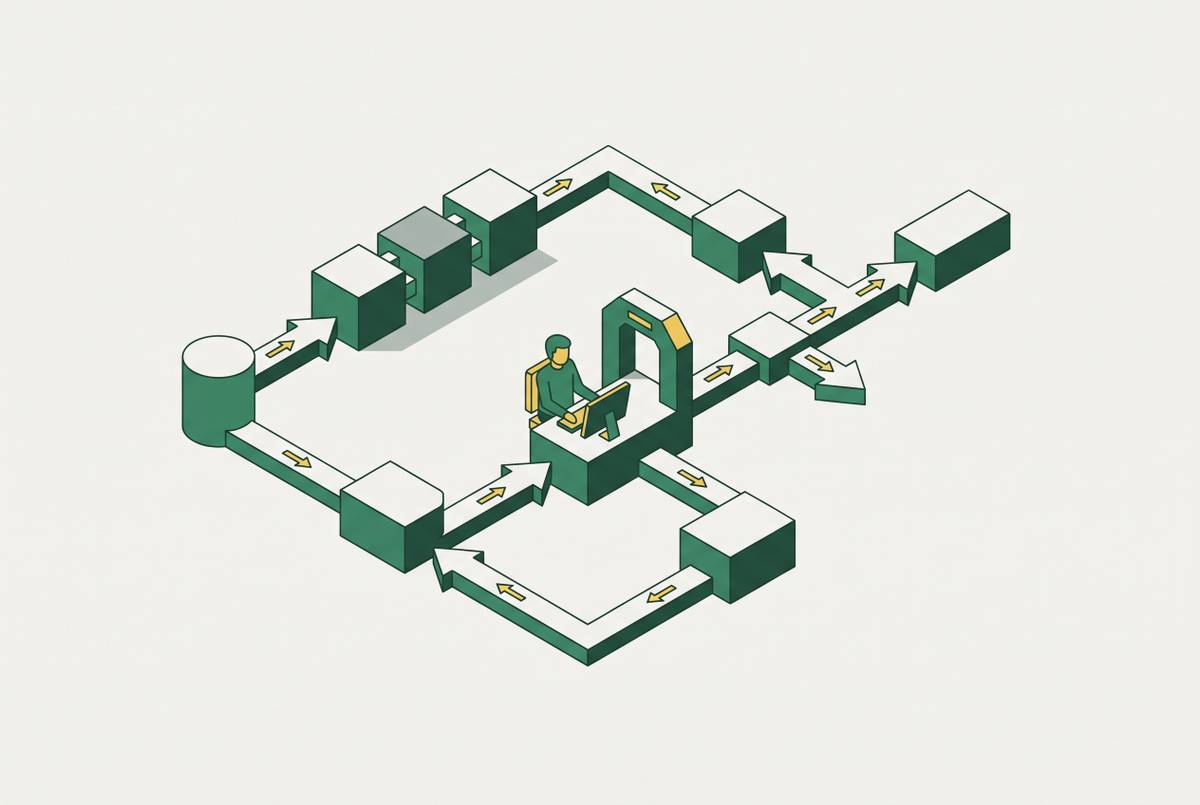
The first intervention is a forensic reconstruction of the target process. The audit follows every step, conditional branch, exception path and human judgment call. It follows the work as actually performed. It finds where an Excel handoff, email, slide deck or a certain employee supplies information that the official process treats as already available. The aim is to locate the dependencies that the formal description leaves out.
An organization automated supplier approvals, but procurement was selecting vendors from an external spreadsheet disconnected from the approval system. The workflow contained an “approved vendor” rule. That rule did not function as intended because vendor data was not being synced, and staff maintained the two sources manually.
The diagnostic question in that case is whether the process has a dependable basis for deciding that a vendor is approved. These are different design problems. The audit must establish which information informs the decision, how it reaches the decision point and where people compensate for a disconnect. Otherwise, the proposed agent inherits a rule whose necessary data conditions do not exist.
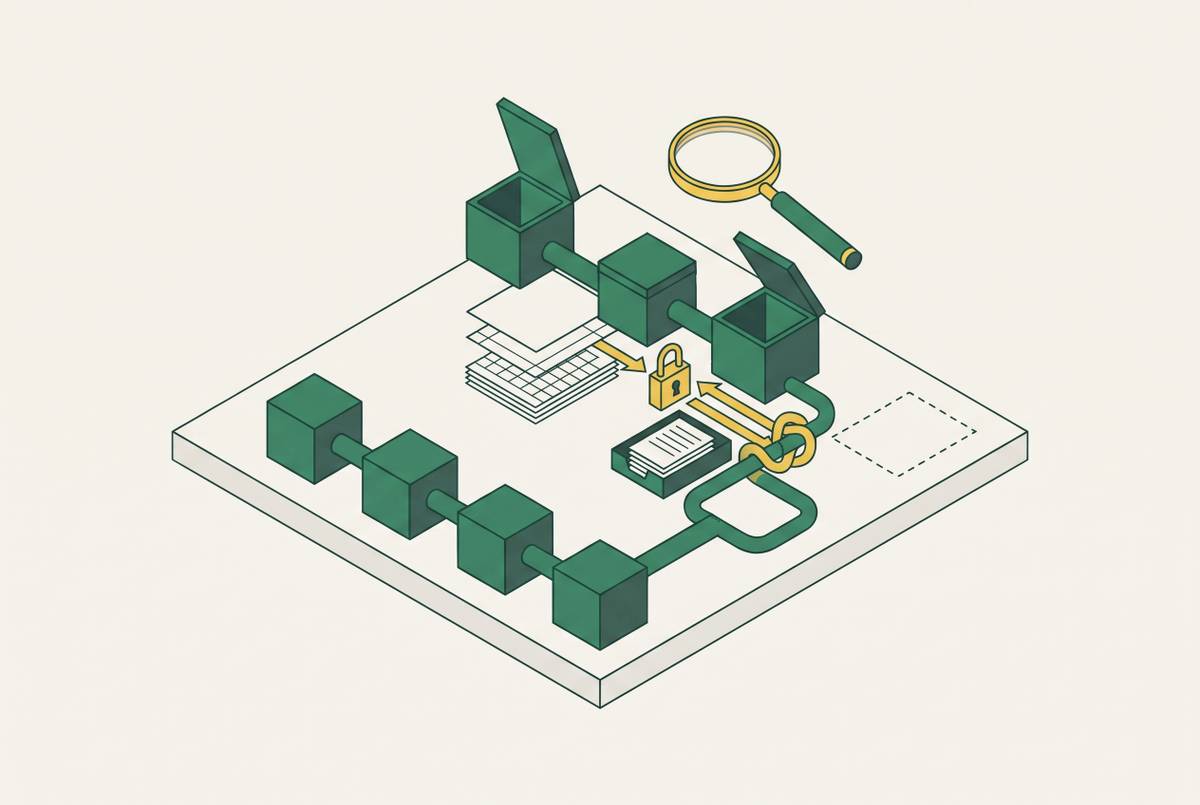
Construction audit readiness reinforces this distinction between possessing information and being able to use it. Auditors examine timestamped approvals, version history, linked change orders and role-based permissions. Traceability is the test. If project history must be reconstructed manually, the system has not preserved a usable account of how decisions were made. This exposes a structural weakness even when each individual document appears complete.
The resulting map must also show which work an agent can do reliably and which calls for human judgment or authority over risk. Not every informal decision should become an autonomous action simply because it can be described. Some decisions require an explicit human owner. Missed deadlines, repeated RFIs on the same issue and field teams reverting to paper forms help locate where this investigation should begin, because workflow defects often appear as operational symptoms before they are declared process problems.
Where handoffs break in construction and why procurement is the highest-risk junction
The procurement-schedule junction reveals where construction work can break down because each side can look complete on its own. Different teams maintain the procurement log and the schedule, with different update cadences and definitions of status. The log says “in process.” The schedule assumes “on site by week 14,” but the first statement does not establish the second.
The Suffolk/MIT white paper identifies supply chain and procurement as one of six value levers. Its model finds that compounded gains depend on integrating procurement data with scheduling and field execution. Procurement information has to support decisions about what can actually happen on site. Without that relationship, an apparent improvement in one part of the process can remain isolated from the work it is meant to enable.
Energization readiness makes the dependency especially clear. Transformers, HV switchgear and breakers have lead times measured in years and can gate energization regardless of construction speed. Faster building cannot remove that constraint. Treating procurement as an engineering function with QA workflows, rather than solely as a purchasing task, recognizes that equipment readiness is part of the execution plan. The audit therefore has to examine more than whether an order has advanced through purchasing.
Commissioning adds a further distinction between physical progress and operational acceptance. A connection that physically energizes may still need validated measurements and communications before operators can accept it into normal service. Defining those requirements early allows procurement specifications, panel designs, controls programming and field testing to follow one consistent technical intent. The forensic work belongs at this junction because declared progress and executable progress can diverge throughout the chain.
How the audit finding changes what gets rebuilt first
The audit's output is a ranked understanding of operational pain. It establishes which broken handoff prevents useful progress, where decision authority is ambiguous and where the cost of the current process is concrete. That ranking determines the starting point. A platform strategy or broad transformation roadmap developed before this work commits resources without first establishing which process needs structural repair.
The lesson for a department rebuilding its workflow is to start with a specific, painful process. In construction and logistics, that should be the process with the clearest gap between its declared state and its executable state, rather than the one attracting the most executive attention. Visibility is not a sequencing criterion. Resolving the identified gap must create the conditions for dependable execution across the process, beyond accelerating one activity within it.
BCG connects this sequencing choice to the difference in outcomes from AI deployment. Its June 2026 report identifies end-to-end process redesign as what separates organizations achieving 60% cost reductions from those capturing far less, after early waves delivered only modest productivity improvements. The figure supports the narrower conclusion that task-level improvement and process-level redesign are distinct interventions with different outcomes. Redesign must put the working structure in place before agents can be expected to make use of it.
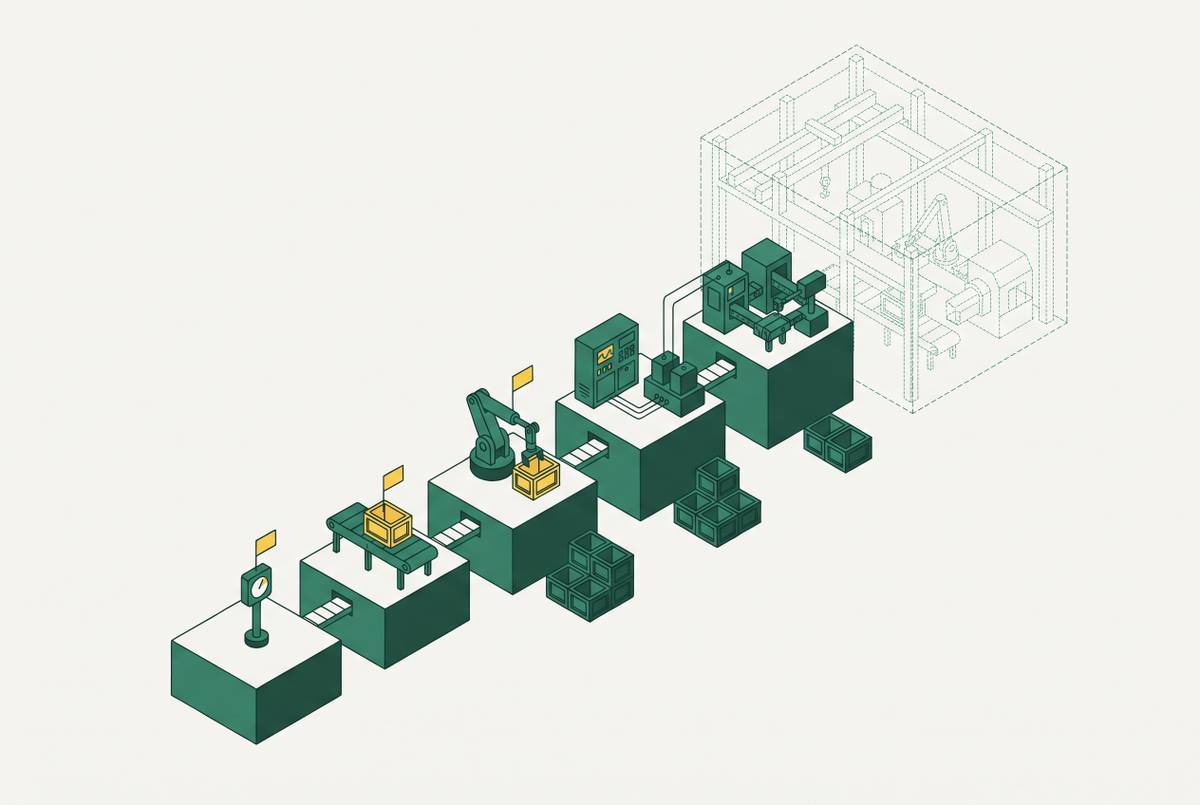
Manufacturing shows how first-order and second-order effects differ. Automation makes tasks faster and cheaper, while redesign changes how work is set up once AI can recognize patterns and adapt to context. The second effect requires operational understanding. It cannot be reached simply by extending automation across more tasks whose dependencies remain unexplained. The audit supplies that understanding, so the rebuild sequence follows what the process needs rather than what the technology can demonstrate most readily.
What the rebuild actually changes — and what it leaves for the agent to do
Judgment calls that can be put into words reliably become rules, while decisions that need human authority keep a named person who answers for them. Exceptions receive defined escalation routes with named owners. This gives the agent a bounded role within the process, rather than an open-ended obligation to compensate for whatever the organization has left unresolved. Its scope follows from the work and the authority available to perform it.
The rebuild also establishes the data conditions for that role. Systems that connect, status definitions that agree and decisions that can be traced replace setups where people have to match records or piece them together by hand. This changes what a status can support. At the procurement-schedule junction, the design must distinguish procurement activity from readiness for the scheduled work.
Human oversight changes with the structure of the work. As agentic workflows scale, requiring approval at every step becomes a bottleneck, so oversight shifts toward humans above the loop. People decide the direction, set the guardrails and handle exceptions. They also retain responsibility for redesigning workflows as conditions change, rather than treating the initial rules as a permanent substitute for operational judgment.
Customization can improve how an agent handles a task, but operational understanding determines how that task belongs within the department's work. The audit gives that distinction practical form. It leaves the organization with explicit decisions about what the agent may execute, what information that execution requires and where responsibility remains human.
An advisory-mode deployment provides a practical bridge between the rebuilt process and autonomous execution. In that mode, the agent supports decisions within the defined workflow while people retain execution authority. The productive endpoint is an agent whose responsibilities fit a process the organization understands, with connected information, explicit rules and a clear route back to human judgment.