The Audit Firms That Tell Construction and Logistics Operators What to Fix Before Naming a Platform
Process audits show construction and logistics what to fix first.
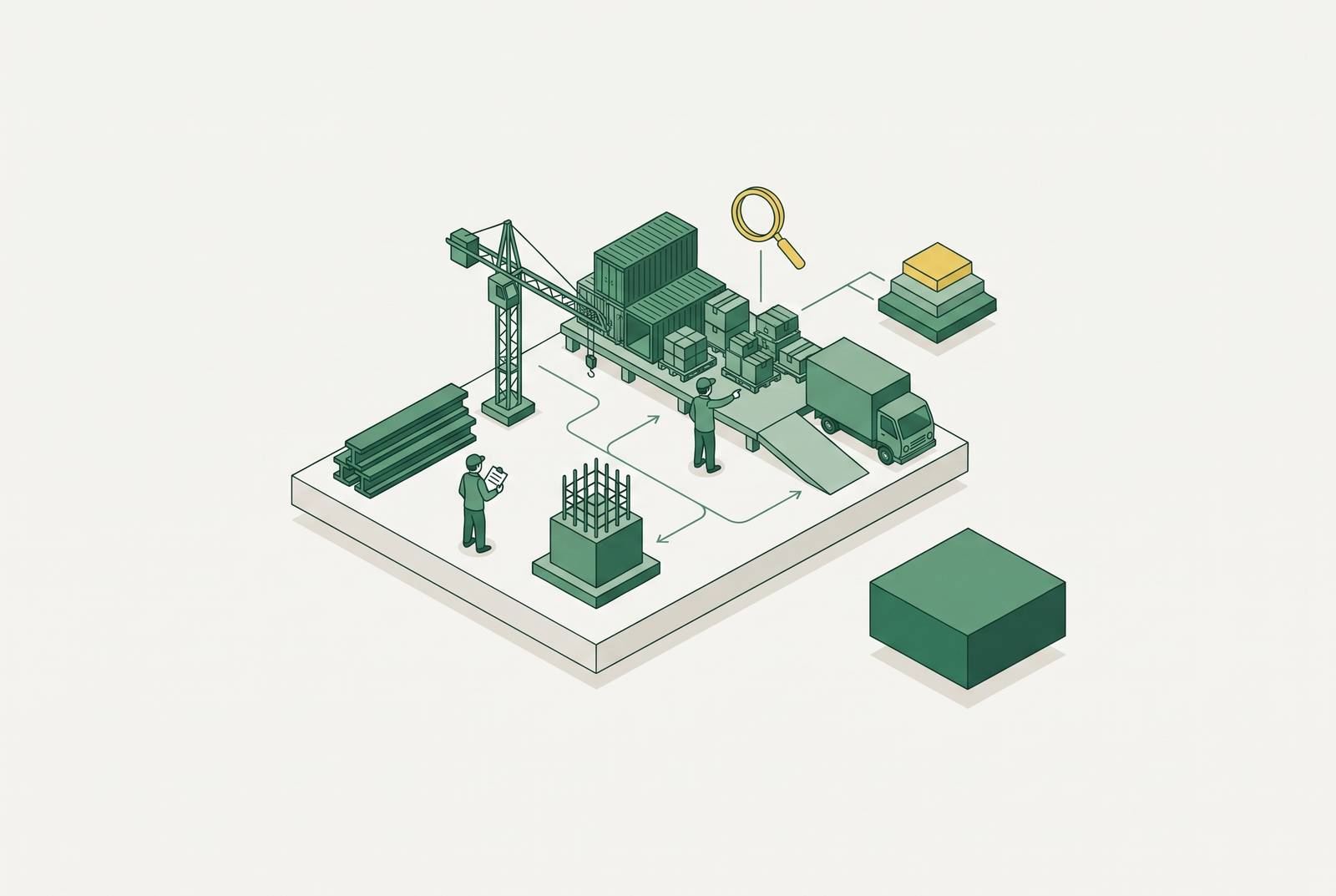
A process audit before AI deployment in construction and logistics operations establishes which workflows need repair before a platform is selected. Diagnostic firms are valuable when they separate what to fix from what to buy, using actual handoffs, data flows, and operational records. The result should be a specific first target and requirements grounded in how the operation runs.
Why operators in construction and logistics keep choosing platforms before they understand their own processes
AI enthusiasm in construction has outpaced realized results. Autodesk’s State of Design & Make construction report found that just under a third of construction leaders say they have met or are close to meeting their AI goals. The breakdown often precedes the technology decision. Tools are layered onto inconsistent daily logs, fragmented procurement data, and siloed cost and schedule systems. Instead of correcting those weaknesses, automation inherits them and can amplify their effects.
Construction makes this sequence especially difficult because each project is effectively a one-off. Unlike manufacturing, knowledge from previous work does not automatically become a repeatable planning process for the next job. The useful knowledge must first be surfaced and documented. When that work is skipped, a platform’s capabilities begin to define the automation agenda, even though nobody has established whether that agenda addresses the operation’s failures. The same sequence problem applies in logistics, where a new tool can be selected before the data flows and handoffs it depends on are understood.
What a process audit actually surfaces that declared plans do not
A process audit finds the points where documented procedure and daily work diverge. A handoff that looks complete on a process map may be where work repeatedly stalls. Historical records may be incomplete, inconsistent, or too late to support the proposed AI use case. Decisions may depend on knowledge held only by individuals and absent from any system. Mapping actual data flows also exposes integration requirements that an intended workflow does not reveal.
Those findings become more consequential when records describe different versions of the same operation. In construction, cost commitments, progress data, and change control records frequently do not align. Their divergence is a warning about downstream AI output. A model or agent cannot be treated as reliable simply because each contributing system contains data. The audit establishes where those records cease to provide a consistent account of the work.
In logistics, the corresponding discovery may be that teams spend most of their working time moving data between systems, leaving less time to act on it. That is a process design problem before it is a purchasing question. Modern platforms may be flexible enough to fit existing workflows, but that leaves open which workflows should be kept. The objection therefore misses the diagnostic task. Auditors must work out whether to change, rebuild, or remove a process before what a platform can do matters.
How construction scheduling and procurement data reveal real project risk before the declared plan does
A declared construction schedule records planning intent. P6 schedules and similar tools do not, by themselves, establish whether long-lead equipment has been ordered, utility applications have been filed, or commissioning dependencies have been sequenced correctly. A schedule review that stops at milestone dates can therefore leave the most consequential uncertainties untouched.
A data center infrastructure project can have land, financing, and demand secured yet miss its declared energization date because transformer and switchgear orders were placed too late. Electrical equipment lead times have stretched significantly. Grid connection waits in primary markets are now more than five years, while queues in Western Europe’s established hubs last many years longer than the roughly 18 to 30 months it typically takes to build. Auditing procurement and utility coordination against the schedule exposes that mismatch.
For a complex project, a realistic schedule distinguishes utility application, load study, facility study, service agreement, and equipment order milestones. It also separates factory acceptance testing, delivery, installation, energization, and commissioning. One blended energization date conceals these dependencies. nPlan uses a very large corpus of real past project schedules to forecast how contractors actually deliver. But its value still depends on whether the schedule data it receives accurately reflects what happens in the field.
What the South Korean construction cases show about where process discipline has to come first
The South Korean construction cases show a different starting point from broad, platform-led adoption. The firms standardized process data before deploying AI against defined operational problems. GS E&C tied its AI system directly into quality management workflows. The workflow gave the system its operational purpose. Defining that process was a prerequisite to using the tool within it.
DL E&C built what it calls a “Flywheel ecosystem” connecting design, construction, and maintenance data into a single decision layer. More than 87 years of accumulated data covering costs, quality, safety, and design now feed live planning. The accumulated records and the work of governing them provided the foundation for connecting information across stages of delivery. AI deployment followed that investment.
These cases address particular operational weaknesses rather than treating AI adoption as an end in itself. Across the examples, the targets include defect tracking, contract review, and project planning. The scope is specific enough to define the required data. That makes the cases relevant to an operator deciding where to begin, even when the operator’s own systems differ. The transferable feature is the sequence of identifying the painful process, organizing its information, and then applying technology.
How payment and contract auditing became a standalone category in construction, and what it reveals about the broader gap
Construction payment auditing applies the same diagnostic logic to the financial layer of a project. Payment applications routinely diverge from contractual requirements in ways that systematic document-level review can detect. The contract alone does not establish what was billed. The emergence of specialist payment auditing services reflects a recurring gap between authorized charges and submitted applications.
Fort Hill Associates built Fort Hill LogiX from a large set of past project audits. The platform checks construction payment applications, using AI to read and extract data and defined procedures to test the charges against the contract and check the math. AI interprets the documents, but the tests follow defined procedures rather than treating interpretation itself as proof of a discrepancy. Each reported observation links back to its source document.
An exception is tied to evidence that can be reviewed, rather than presented as an unexplained assessment. It also shows why operational experience is relevant to the category. The platform grew from audit work, so the review requirements preceded the software. Still, a payment audit has wider value only if its findings help show where the process needs work, including where payment review has lost touch with contractual requirements.
The logistics billing audit as a parallel diagnostic category
Carrier charges and contract authorizations can diverge without the discrepancy being apparent in routine operations. Surcharges shift frequently, contracts grow more complex, and undetected errors drain value from logistics networks. Systematic review makes those discrepancies visible. As in construction payments, the transaction record must be tested against the terms that govern it.
Recovering past overbilling is only part of the value. The audit can reveal carrier relationships with inadequate contract controls and data flows that allow billing errors to pass undetected. If the weakness lies between systems, choosing an optimization platform still leaves open whether the data it would use is fit for optimization. The diagnostic task is to identify which controls and workflows need rebuilding before a new tool relies on their output.
What separates firms that diagnose processes from firms that sell platforms — and why the distinction matters for buyers
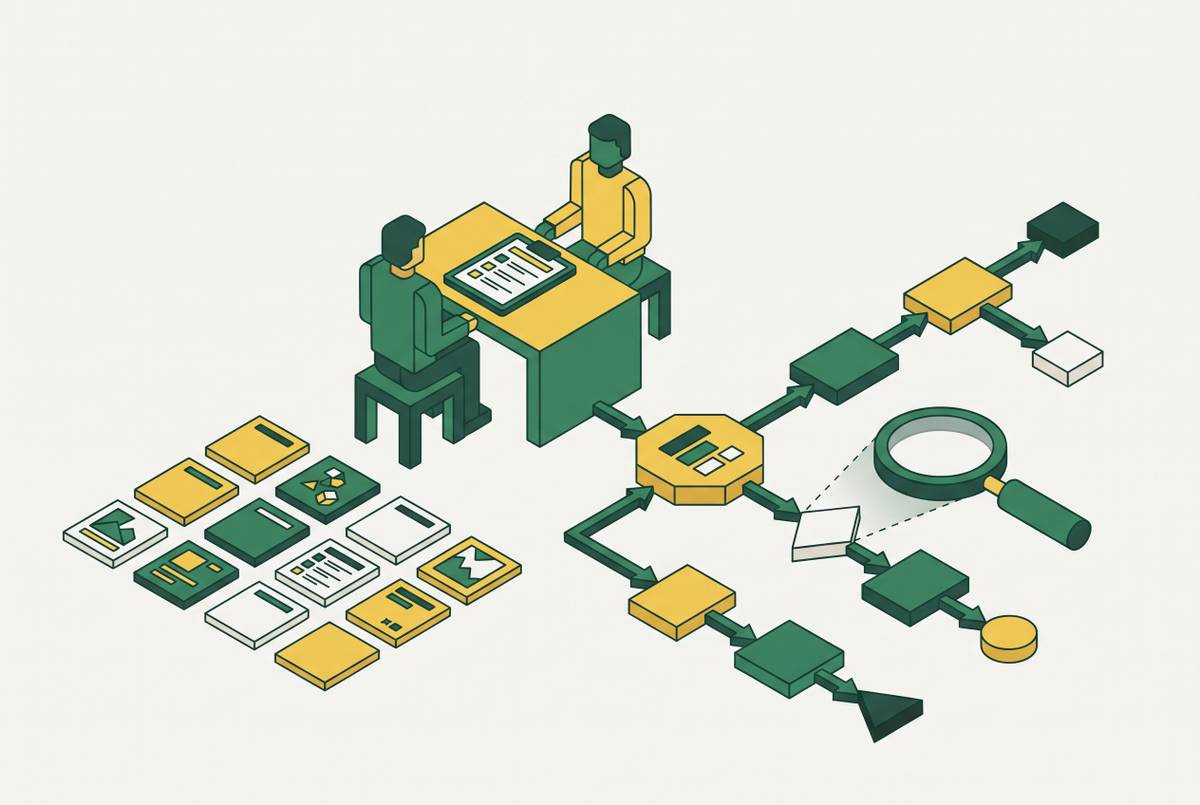
A diagnostic-first firm begins by asking the operator to demonstrate how work happens today. The demonstration includes the approved process map along with stalls, workarounds, and unreliable information. It precedes any discussion of platform capabilities. From that evidence, the firm identifies a painful process that is both consequential and tractable, then surfaces the data quality, integration, and governance gaps that would undermine a proposed solution.
The decisive distinction is independence between diagnosis and selection. A useful finding must remain valid even if the operator buys no software from the firm that produced it. Operational experience strengthens that diagnosis, as the audit-led origins of LogiX illustrate, but experience alone does not establish independence. Buyers need to distinguish those two attributes. A firm can understand the work deeply and still have a commercial interest in a particular purchasing outcome.
When diagnosis cannot be separated from selling, discovery questions can become bounded by what the existing platform answers. The findings may support buying the product without showing everything the operation needs. A narrow pilot can then succeed while leaving wider architectural problems unresolved. Once the platform is selected and contracted, those problems emerge during expansion, making the decision expensive and disruptive to unwind. Pilot success is therefore not a substitute for credible diagnosis.
For operations leaders evaluating a firm, the useful question is “what will you tell us to fix that you cannot help us fix?” The answer should show whether the firm sees needs beyond what it can offer and where its help ends. A firm unable to answer clearly has not demonstrated that its audit is independent of its sales process. The buyer is then evaluating a platform vendor with an audit wrapper.
How do you audit construction and logistics workflows before rolling out AI?
An operator commissioning an audit should begin with one specific, painful process where work is visibly breaking, rather than with an enterprise AI initiative or a broad transformation roadmap. Walk the process step by step with the people who perform it as well as those who designed it. Record where it stalls and which workarounds keep it moving. At each handoff, check what information is missing, cannot be trusted, or moves outside the planned flow.
The review should also surface knowledge that exists only in people’s heads and consider whether those people are likely to remain. That knowledge may be needed to explain why work happens differently from the process on paper. Examine data completeness, consistency, and timeliness against the proposed AI use case. Then map the integration gaps between systems touched by the process. These checks establish what must change before automation can operate on a dependable basis.
In construction, a scheduling or procurement audit should separately examine utility application status, long-lead equipment orders, commissioning sequences, and trade coordination dependencies. Master schedule dates are not enough on their own. In logistics, the audit should map manual data transfers, carrier terms that are not enforced systematically, and billing reviews that occur too infrequently to catch errors before they compound. The scope differs by industry, but each check connects the proposed automation to the condition of the process it would use.
The audit’s output should be a prioritized account of what to rebuild, specific enough to evaluate platforms against real requirements. It should not become a feature checklist for demonstrations. Firms that do this well can have the first rebuilt process live in weeks because the diagnosis identifies a manageable first target. That is the contrast with a long, platform-led transformation roadmap. A short, specific audit makes the next decision narrower, better grounded, and less costly to reverse.