Identifying Handoff Failures in Multi-Department Workflows
Five structural patterns explain why work fails silently at departmental boundaries.
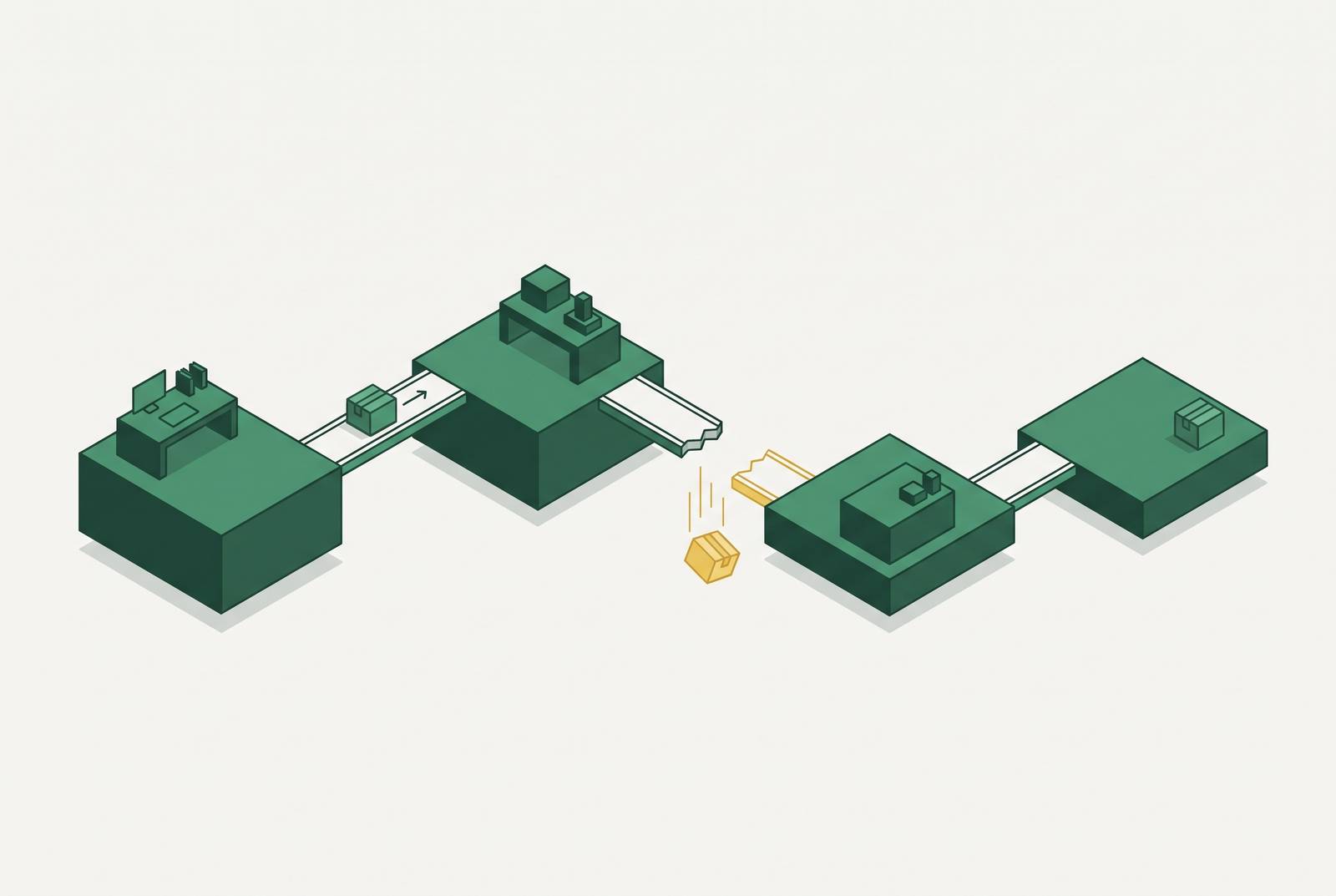
A project schedule can show every milestone hit, every department performing on target, and still produce a client escalation that no single team can explain. That is the signature of a handoff failure, and it has almost nothing to do with how well people communicate. Inside a department, informal coordination papers over weak process design: a shared manager catches confusion before it spreads, a shared tool keeps everyone looking at the same data, shared incentives mean nobody benefits from letting a task drop. None of those shock absorbers survive the trip across a department line. At the boundary, every one of them vanishes at once: different systems hold different versions of the truth, different priorities push teams toward different definitions of "done," different vocabularies describe the same task in incompatible terms, and no shared authority exists below a vice president to arbitrate the dispute. A process with ten handoffs does not fail once; the probability of failure compounds at each seam, so a workflow can look chaotic even when every individual department is executing well, and telling people to "communicate better" never solves it, because the defect sits in how the work is organized.
Why failures at the seam are hard to see and attribute
The seam is also the hardest place in a workflow to see clearly, and that is what allows these failures to persist for years. When something breaks at a boundary, both departments can point to the other with some justification, and both are often partly right; neither one is positioned to own the fix. Departmental scorecards make this worse rather than better. A procurement team measured on cost savings and a logistics team measured on-time delivery rates are each optimizing for a number that stops at their own door; there is no metric that scores the handoff between them, so a failure in the transition can persist indefinitely without appearing on anyone's dashboard. Many of these protocols were never designed. An informal agreement struck between two employees years earlier, back when the organization was small enough that everyone knew where things stood, often gets inherited rather than built: what functioned fine in a team of twelve becomes chronic dysfunction in an organization of three hundred, because nobody ever came back to formalize what had only ever been a verbal understanding. These symptoms are visible well before any formal review catches them: teams keep separate tracking spreadsheets for the same project, employees chase repeated status updates because nobody trusts the handoff to hold, and work gets kicked back for missing information at the same transition point, over and over, without anyone escalating it as a process problem rather than an isolated mistake.
The five structural patterns that cause most handoff failures
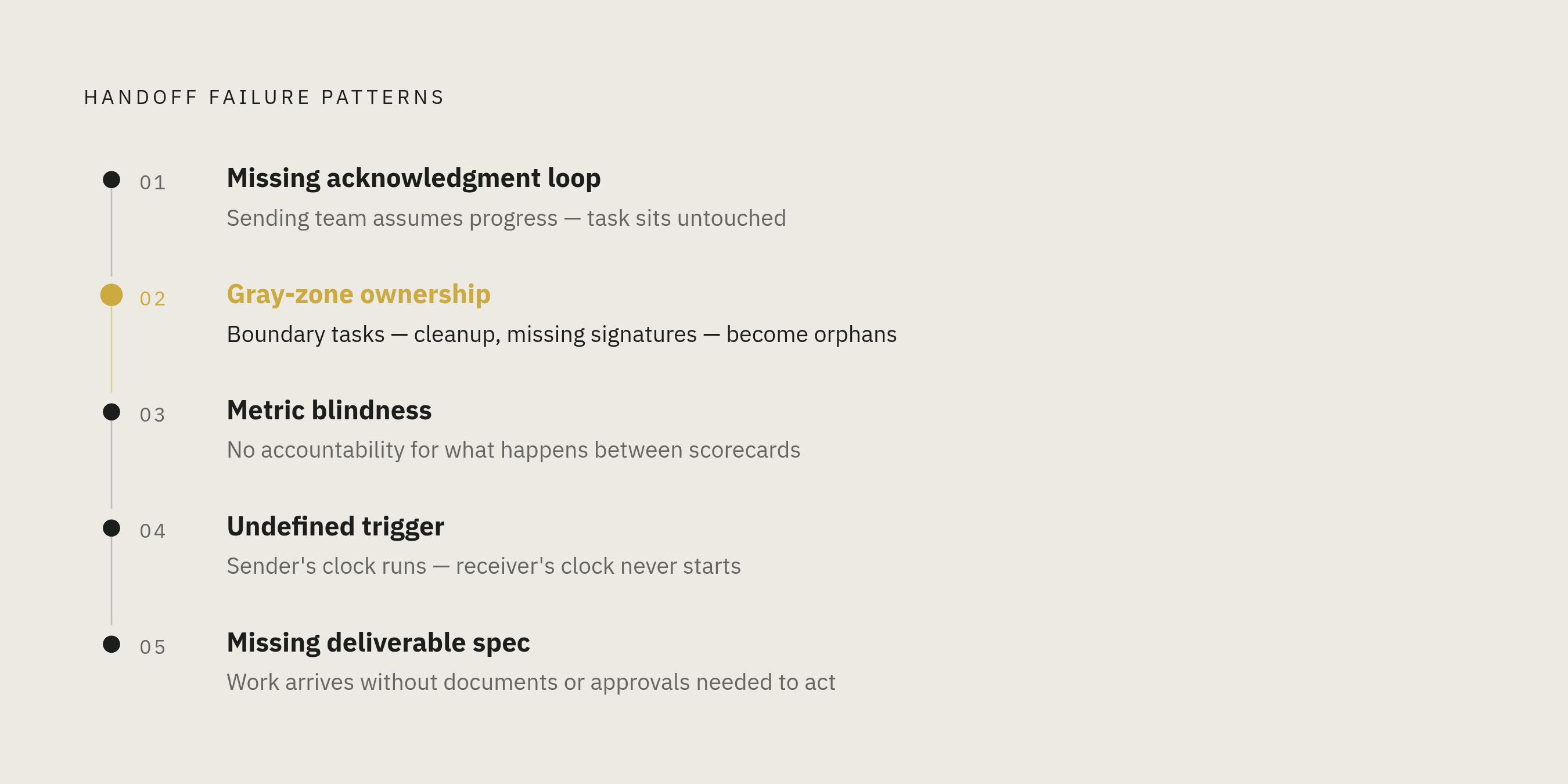
Nearly every handoff failure traces back to one of five recognizable structural patterns, and a troubled boundary usually carries two or three of them running simultaneously. The first is a missing acknowledgment loop: without a mandatory confirmation that work has been received, the sending team assumes progress is happening while the task sits untouched in a queue, and the gap only becomes visible when a customer escalates rather than when an internal alert fires. The second is gray-zone ownership, the space between "sales owns the deal" and "onboarding owns the project" where boundary tasks like data cleanup, expectation resets, or missing signatures become orphans nobody claims until an executive is forced to intervene. The third is metric blindness, where each department's incentives are tuned to its own performance and nobody is accountable for what happens in the space between two scorecards. The fourth is an undefined trigger: the receiving team has no shared definition of when the next step actually begins, whether that's a form submission, a manager's approval, a payment clearing, or a notification being sent, so the clock the sender thinks is running has never actually started for the team on the other end. The fifth is a missing deliverable specification, where work arrives without the documents, approvals, or specs needed to act on it, and the receiving employee has to stop and chase down what should have arrived already, turning a moving process into a string of follow-up emails.
What handoff failures look like in construction workflows
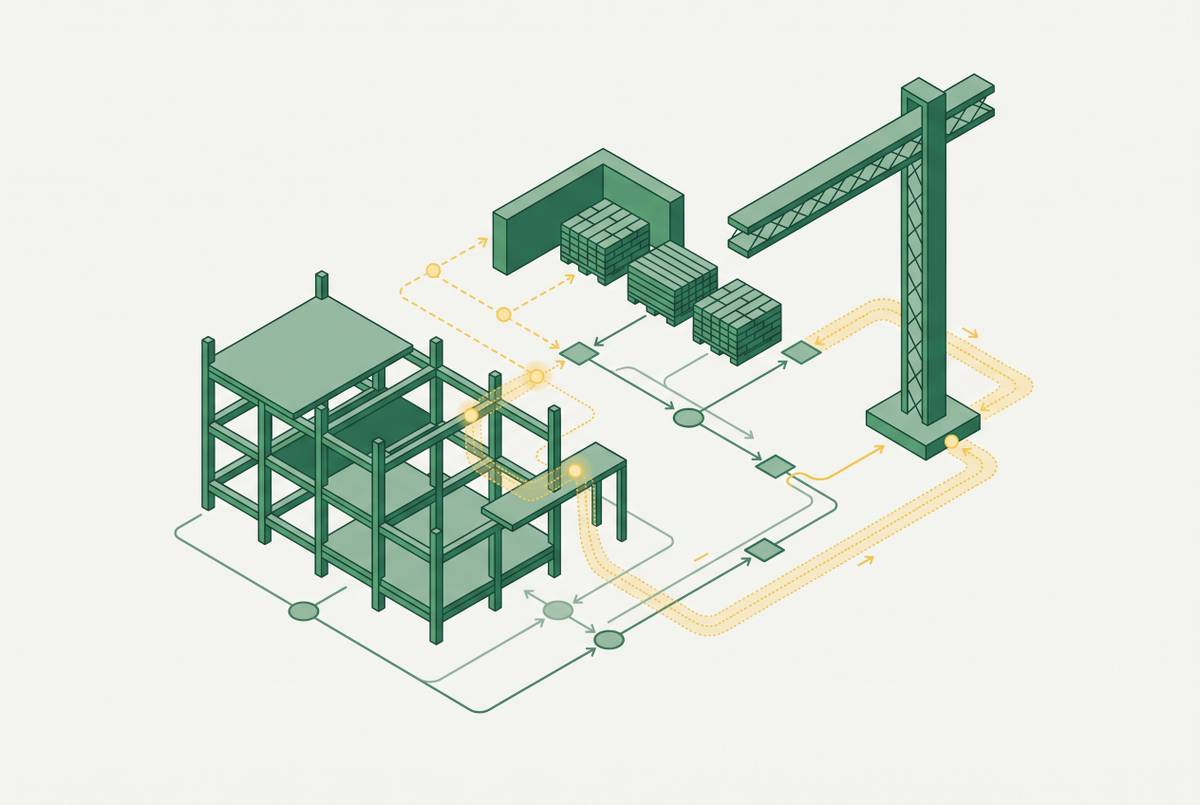
Construction makes these five patterns unusually visible, because a scope gap or a documentation failure introduced early in a project compounds across the entire lifecycle rather than staying contained to a single transaction. Consider the seam between estimating and operations. An estimator wins the job and forwards a number to the project manager without a structured handoff meeting, and the project manager inherits a figure stripped of its context: the assumptions behind it, the verbal commitments made to the client, the site conditions the estimator had in mind, the exclusions that were never written down anywhere formal. What needs to cross that boundary is specific and knowable: the line-by-line estimate with its context intact, scope inclusions and exclusions, verbal commitments made to the client, subcontractor details and how long their pricing holds, site conditions, and the schedule assumptions baked into the number. Most of that information exists somewhere during estimating, scattered across email threads, spreadsheets, and the estimator's memory. It exists right up until the moment it's needed and then effectively doesn't. Gray-zone ownership occurs just as concretely at the subcontractor level: a task falls squarely between two subcontractors' scopes, gets claimed by neither, and only surfaces mid-project when someone notices it was never done.
The handover from contractor to owner carries even higher stakes, because it is a legal, operational, and financial risk transfer event, the exact line where the contractor's liability ends and the owner's begins. That line has to be drawn in writing, not inferred after the fact. Missing acknowledgment loops are especially dangerous here: every item on a snag list needs a responsible party, a deadline, and a verified close-out confirmed by a designated inspector. Unresolved snag items are the most common trigger for disputes that surface after handover, after the teams that could have resolved them cheaply have moved on to other projects.
A field trial run by the Simplar Foundation puts a number on what all of this costs. The study examined an 11-activity, 10-handoff work sequence under controlled field conditions and modeled what happened when the number of handoffs was reduced through multiskilling. Individual modeled scenarios ranged from two percent to ninety-two percent less elapsed time. Handoff frequency drives elapsed-time variance more than the complexity of the underlying tasks does. The operational implication follows directly: reducing the number of seams in a workflow is as powerful a lever as improving what happens at any single seam, and in many cases a more reliable one.
Energization readiness and the anatomy of a multi-department handoff failure
Few current workflows expose this anatomy as completely as energization readiness for data centers and other large power users, where a facility can clear every internal milestone and still sit idle because of a seam it never controlled. A site can have its transformers installed and its switchgear fully in place, fully built by every internal measure, and still wait months to go live because the qualified crews needed to test and certify the system are committed to other projects. That is a missing acknowledgment loop operating at the commissioning boundary: construction believes the facility is ready to move forward, but nobody confirmed that the testing capacity exists to receive it.
London's data center market shows the same failure at a larger scale. Multiple developments across the city have reached full construction completion, including internal system commissioning and fit-out, only to face grid energization timelines stretching years beyond their original targets, in some cases more than a decade, because of backlog at the city's substations. The building is finished. The facility that connects it to power is not, and nobody along the chain from developer to grid operator owned the gap between those two facts early enough to close it.
The equipment itself has started working against the schedule instead of for it. Power transformers now average 128 weeks of lead time, and generator step-up units average 144 weeks, with some specialized orders stretching to four years. The procurement-to-construction handoff has effectively reversed direction: the building now waits on the transformer rather than the transformer waiting on the building. This is metric blindness in its purest form. If procurement is measured on cost savings and construction is measured on schedule adherence, neither department is accountable for the gap between when the equipment order goes in and when the construction milestone that depends on it arrives.
The interconnection queue compounds all of it at the system level. The U.S. queue has swelled to 2,600 GW, and nearly eighty percent of new generation projects withdraw before completion. That is gray-zone ownership at a scale no single party can resolve: developers, utilities, and grid operators each hold a piece of the process, and no one of them controls the full sequence from application to energized connection.
The fix starts with how the schedule itself is built. A realistic project schedule should carry separate milestones for the utility application, the load study, the facility study, the service agreement, the equipment order, factory acceptance testing, delivery, installation, energization, and commissioning. A single blended "energization date" collapses every one of those seams into one number, and in doing so makes the handoff failures hiding inside them invisible until one of them blows the whole date up.
Locating the seams in your own workflow
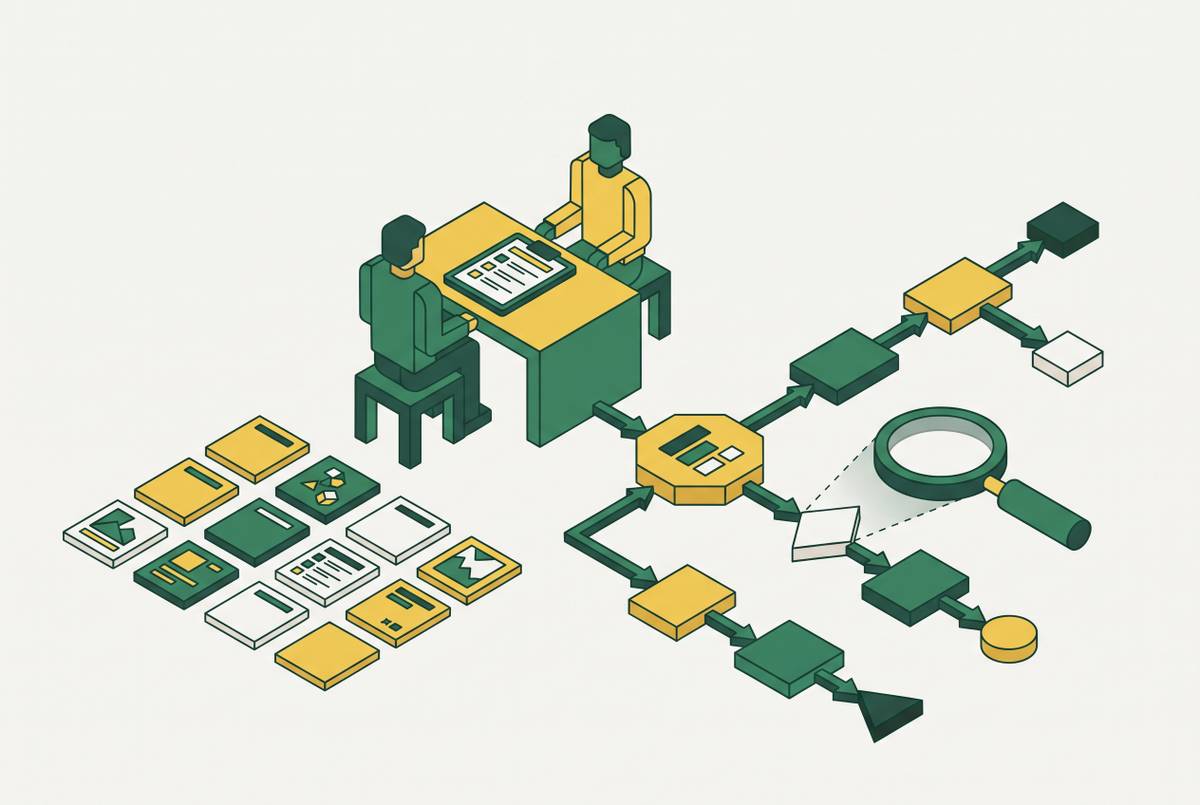
Finding these failures before they compound means applying the same rigor to the boundaries between departments that most organizations already apply inside them. Start by mapping every handoff in the core value chain: every point where responsibility for a task moves from one team, system, or individual to another, including the informal transitions that never made it into a written procedure, the email that quietly triggers the next action, the verbal confirmation that kicks off a workflow, the spreadsheet passed from one department to the next without anyone formally defining what "passed" means. Written procedures describe how a workflow is supposed to run. Process mapping, done collaboratively with the people who actually do the work, reveals how it runs in practice, and it's common for different departments to describe the exact same handoff in contradictory terms, which is itself diagnostic.
Next, assign a single accountable individual to each transition. If the honest answer to "who is accountable for this handoff?" is unclear, or if accountability is shared across two departments without one designated lead, that ambiguity is a structural gap. Every handoff needs one accountable person, not a department, because a department cannot be paged at two in the morning when something stalls.
Then define the deliverable at each transition point precisely. For every handoff, document the specific trigger that starts the transfer, the information or documentation that has to be complete before the transfer happens, the individual who owns the next action, the timing expectation attached to it, and the mechanism that confirms the handoff occurred. If a team cannot answer these five questions the same way every time, the handoff is running on assumptions, memory, or whoever happens to be experienced enough to improvise around the gap. The audit should then surface which of the five structural patterns, missing acknowledgment loop, gray-zone ownership, metric blindness, undefined trigger, or missing deliverable specification, is operating at each seam; each one demands a different repair. Most organizations that run this audit honestly discover the same thing: the process they declared on paper and the process their people actually run are two different workflows, and the gap between them is where most of the failures above were hiding all along.
Rebuilding the process versus patching the handoff
Identifying the failure pattern at a seam is only half the job, and the instinct to patch it with a notification tool, a new recurring meeting, or an AI agent dropped on top of the existing process tends to reproduce the failure rather than resolve it. A notification tool layered onto a missing acknowledgment loop still doesn't force anyone to confirm receipt; it just adds another unread message to the pile. A new meeting cadence layered onto gray-zone ownership doesn't assign the orphaned task to anyone; it just gives more people a recurring opportunity to discuss who should have owned it. An AI agent layered onto an undefined trigger doesn't define when the next step begins; it automates the ambiguity and moves it downstream, faster. Each of the five structural patterns identified through an honest audit requires a structural fix at the level it occurred: a mandatory confirmation step built into the process itself, a named accountable owner assigned to the boundary task, a shared metric that scores the transition rather than either side of it, a jointly defined trigger both departments agree to in writing, or a specified deliverable checklist that has to be complete before the handoff counts as made. None of these fixes are complicated to describe. They are simply the work that organically grown processes skipped the first time, and the only way to close a structural gap is to go back and build the structure that should have been there from the start.